.png)
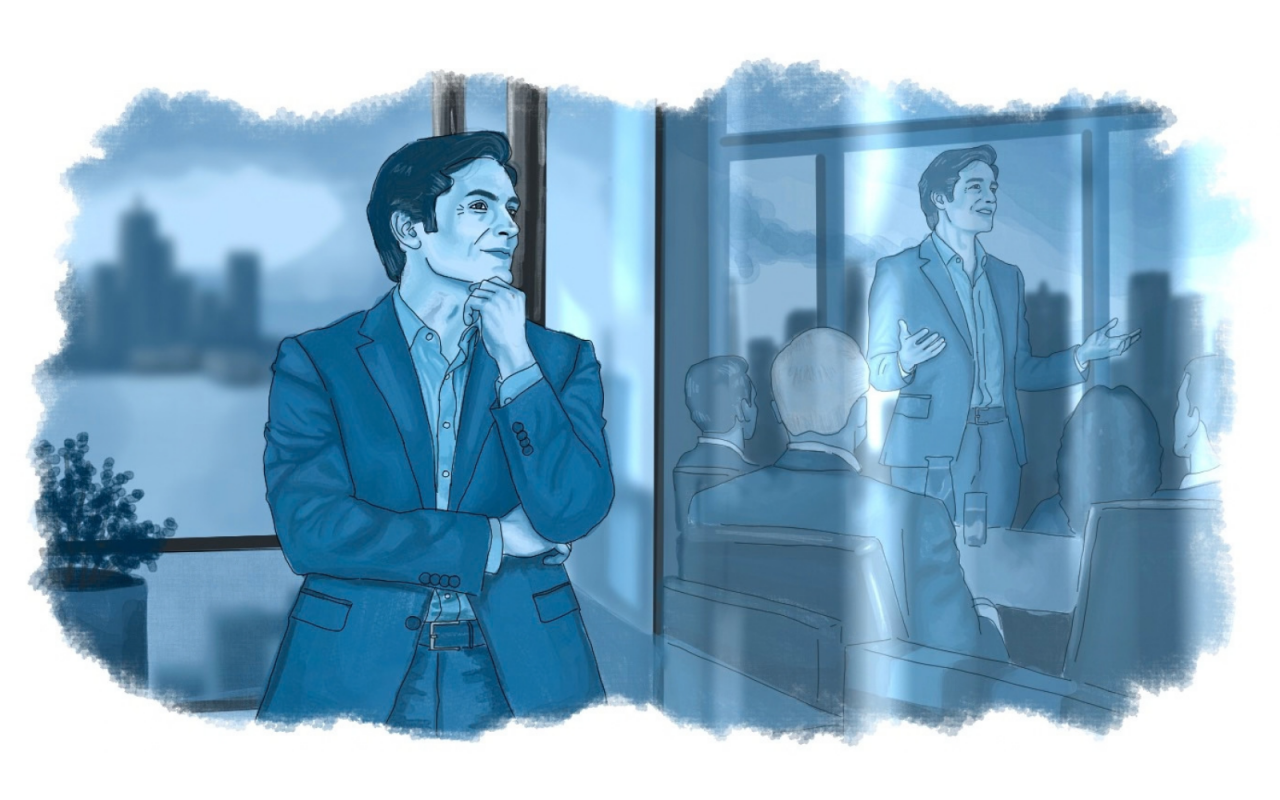
My coachee, Tom, had just been promoted into a role that required regular presentations to the leadership team. He was knowledgeable, capable, and well prepared. Yet when he was challenged with a difficult question, he had a tendency to freeze. His mind would go blank, even when he knew the answer.
You can imagine how this affected him! The night before, Tom would lose sleep. The night after, he would replay the meeting in his mind, obsessing on what he wished he had said or done differently.
When I asked Tom to say more about what happened in the hours before a presentation, he began to notice a pattern. His thoughts kept returning to what he hoped would not happen. He imagined being challenged. He pictured himself freezing.
In other words, Tom’s mind was rehearsing the outcomes he did not want. He had let his mind become his enemy.
That observation gave us a useful place to turn our attention. What would a successful presentation look like? How would he stand? How would he breathe? What might he say if someone challenged him? How would he pause, think, and respond, rather than freeze?
How could he turn his mind into his ally?
Tom particularly enjoyed this part of our conversation and admitted that his mind had been so focused on avoiding failure, that it had not really rehearsed success.
Now Tom was eager to experiment with replacing his negative mental images with positive, specific ones. Not vague optimism. Not pretending that his colleagues would pose easy questions. Rather, he would picture himself responding calmly and thoughtfully to the most difficult questions possible.
He committed to this shift in focus, and (lo and behold) …the next presentation went much better!
This mental rehearsal technique is called visioning, and it is used regularly by top athletes.
Speaking of athletes, years ago, I worked with a young gymnast who was motivated to win medals. The balance beam was her key event. If you fall once, you lose a full point and can forget about reaching the podium.
When we first discussed her preparation, her thoughts sounded like this: "I hope I do not fall on my aerial cartwheel." "I hope I do not wobble on my back handspring."
So we worked on replacing those thoughts with a vivid mental rehearsal of a strong routine. She pictured herself completing each movement cleanly. She imagined nodding to the judges after her dismount, walking back to her team, hearing the applause, hearing her name announced as the winner, and standing on the highest podium block.
After exercising this thought process multiple times, guess how many times she fell from the beam in competition over the next two years? None. Not one time. Yes, there were wobbles. But never a fall!
I have used visioning myself. Earlier in my career I was invited to deliver a test workshop on presentation skills. The participants would be members of the Learning and Development team at a Big 4 accounting firm. If it went well, they would fly me around Europe to deliver this workshop at their local offices.
I wanted this bad! I also knew there would be no second chance.
So I visualized standing at the front of the classroom, modelling the presentation techniques I would be teaching, including: eye contact, arm use, a solid stance, taking space in the room, moving with purpose, and more. I also physically rehearsed in my living room, so that by the time I delivered the session, it wasn’t the first time.
Very importantly, I also pictured (OK, fantasized) people coming up to me afterward and commenting on how experienced I must be. I will never forget almost falling over when that actually happened!
What to take away here?
When leaders face high-stakes moments, their minds often rehearse the very thing they fear. That is human, yet not always useful. A helpful question might be: What would you like your mind to rehearse instead?
By rehearsing success, you move your mind from enemy to ally. And that is a sure bet for success when the stakes are high!
--------------------------------------------------------------------------------------
.png)